Senin, 02 Desember 2019

Australian woman survives 12 days in outback after finding watering hole - BBC News

A woman rescued after 12 days stranded in Australia's remote outback said she survived by eating biscuits and drinking from a watering hole.

Tamra McBeath-Riley, 52, was with two other people who became stranded when their car got stuck in a riverbed.

The group split up to get help. Ms McBeath-Riley was found near her car but her companions are still missing.

Police said they would be "severely dehydrated" after being stranded in the outback for 13 days.

'It kept them alive'

Ms McBeath-Riley had set off with two others, Claire Hockridge and Phu Tran, on an afternoon drive from Alice Springs in the Northern Territory on 19 November.

They took Ms McBeath-Riley's dog Raya, a female Staffordshire bull terrier, with them.

The group were travelling in remote territory just south of Alice Springs when they found themselves stuck in the bed of the Hugh River.

Speaking to reporters outside a hospital in Alice Springs, Ms McBeath-Riley said the group had stayed by the car for around three days in an attempt to free it.

"We tried many times to try to get out, but just couldn't get out, the river was just too large," she said.

"During the day it's just really hot so we dug ourselves under the car. At night [we] could sleep in the car."

They used up all their supplies of water, as well as some iced vodkas, biscuits and beef noodles they had in the car.

They eventually found a watering hole, and boiled the water before sieving it through a shirt.

"It was still quite dirty, not hygienic water but it kept them alive," NT Police Superintendent Pauline Vicary told the Australian Broadcasting Corps.

They eventually decided to split up to get help. Mr Tran and Ms Hockridge planned to walk towards the highway.

Ms McBeath-Riley stayed in the area, thinking her dog would not survive a long walk.

Northern Territory Police despatched helicopters to search for the trio. They eventually spotted Ms McBeath-Riley about 1.5km (0.9 miles) away from the car area after a local person reported seeing tyre tracks.

"She's had a fairly traumatic period of time," Supt Vicary said. "Sensibly she appears to have stayed where the water is and has been drinking that and that's probably what kept her going."

It is not clear if her dog was found along with her.

Ms McBeath-Riley was taken to hospital and treated for dehydration and exposure.

She said she had assumed her companions had already been found and that "to find out that's not the case is worrying".

Police are stepping up their search for the pair. Supt Vicary said officers had yet to begin searching the area by foot.

"Because of the terrain that they have gone missing in, and because we don't have a particularly focused area, we are still doing the helicopters," she told ABC.

"It's quite a diverse terrain - there's sandy dunes, there's hard clay, there's areas of dense trees but there is also rocks and ranges in the area as well."

Let's block ads! (Why?)


https://news.google.com/__i/rss/rd/articles/CBMiMWh0dHBzOi8vd3d3LmJiYy5jb20vbmV3cy93b3JsZC1hdXN0cmFsaWEtNTA2MjYzNzDSATVodHRwczovL3d3dy5iYmMuY29tL25ld3MvYW1wL3dvcmxkLWF1c3RyYWxpYS01MDYyNjM3MA?oc=5

2019-12-02 16:04:39Z
52780453773733

Australian woman survives 12 days in outback after finding watering hole - BBC News

A woman rescued after 12 days stranded in Australia's remote outback said she survived by eating biscuits and drinking from a watering hole.

Tamra McBeath-Riley was with two other people who became stranded when their car got stuck in a riverbed.

The group split up to get help. Ms McBeath-Riley was found near her car but her companions are still missing.

Police said they would be "severely dehydrated" after being stranded in the outback for 13 days.

'It kept them alive'

The 52-year-old woman had set off with two others, Claire Hockridge and Phu Tran, on an afternoon drive from Alice Springs in the Northern Territory on 19 November.

They took Ms McBeath-Riley's dog Raya, a female Staffordshire bull terrier, with them.

The group were travelling in remote territory just south of Alice Springs when they found themselves stuck in the bed of the Hugh River.

Speaking to reporters outside a hospital in Alice Springs, Ms McBeath-Riley said the group had stayed by the car for around three days in an attempt to free it.

"We tried many times to try to get out, but just couldn't get out, the river was just too large," she said.

"During the day it's just really hot so we dug ourselves under the car. At night [we] could sleep in the car."

They used up all their supplies of water, as well as some iced vodkas, biscuits and beef noodles they had in the car.

They eventually found a watering hole, and boiled the water before sieving it through a shirt.

"It was still quite dirty, not hygienic water but it kept them alive," NT Police Superintendent Pauline Vicary told the Australian Broadcasting Corps.

They eventually decided to split up to get help. Mr Tran and Ms Hockridge planned to walk towards the highway.

Ms McBeath-Riley stayed in the area, thinking her dog would not survive a long walk.

Northern Territory Police despatched helicopters to search for the trio. They eventually spotted Ms McBeath-Riley about 1.5km away from the car after a local person reported seeing tyre tracks.

"She's had a fairly traumatic period of time," Supt Vicary said. "Sensibly she appears to have stayed where the water is and has been drinking that and that's probably what kept her going."

It is not clear if her dog was found along with her.

Ms McBeath-Riley was taken to hospital and treated for dehydration and exposure.

She said she had assumed her companions had already been found and that "to find out that's not the case is worrying".

Police are stepping up their search for the pair. Supt Vicary said officers had yet to begin searching the area by foot.

"Because of the terrain that they have gone missing in, and because we don't have a particularly focused area, we are still doing the helicopters," she told ABC.

"It's quite a diverse terrain - there's sandy dunes, there's hard clay, there's areas of dense trees but there is also rocks and ranges in the area as well."

Let's block ads! (Why?)


https://news.google.com/__i/rss/rd/articles/CBMiMWh0dHBzOi8vd3d3LmJiYy5jb20vbmV3cy93b3JsZC1hdXN0cmFsaWEtNTA2MjYzNzDSATVodHRwczovL3d3dy5iYmMuY29tL25ld3MvYW1wL3dvcmxkLWF1c3RyYWxpYS01MDYyNjM3MA?oc=5

2019-12-02 09:55:03Z
52780453773733

Australian woman survives 12 days in outback after finding watering hole - BBC News

A woman rescued after 12 days stranded in Australia's remote outback said she survived by eating biscuits and drinking from a watering hole.

Tamra McBeath-Riley was with two other people who became stranded when their car got stuck in a riverbed.

The group split up to get help. Ms McBeath-Riley was found near her car but her companions are still missing.

Police said they would be "severely dehydrated" after being stranded in the outback for 13 days.

'It kept them alive'

The 52-year-old woman had set off with two others, Claire Hockridge and Phu Tran, on an afternoon drive from Alice Springs in the Northern Territory on 19 November.

They took Ms McBeath-Riley's dog Raya, a female Staffordshire bull terrier, with them.

The group were travelling in remote territory just south of Alice Springs when they found themselves stuck in the bed of the Hugh River.

Speaking to reporters outside a hospital in Alice Springs, Ms McBeath-Riley said the group had stayed by the car for around three days in an attempt to free it.

"We tried many times to try to get out, but just couldn't get out, the river was just too large," she said.

"During the day it's just really hot so we dug ourselves under the car. At night [we] could sleep in the car."

They used up all their supplies of water, as well as some iced vodkas, biscuits and beef noodles they had in the car.

They eventually found a watering hole, and boiled the water before sieving it through a shirt.

"It was still quite dirty, not hygienic water but it kept them alive," NT Police Superintendent Pauline Vicary told the Australian Broadcasting Corps.

They eventually decided to split up to get help. Mr Tran and Ms Hockridge planned to walk towards the highway.

Ms McBeath-Riley stayed in the area, thinking her dog would not survive a long walk.

Northern Territory Police despatched helicopters to search for the trio. They eventually spotted Ms McBeath-Riley about 1.5km away from the car after a local person reported seeing tyre tracks.

"She's had a fairly traumatic period of time," Supt Vicary said. "Sensibly she appears to have stayed where the water is and has been drinking that and that's probably what kept her going."

It is not clear if her dog was found along with her.

Ms McBeath-Riley was taken to hospital and treated for dehydration and exposure.

She said she had assumed her companions had already been found and that "to find out that's not the case is worrying".

Police are stepping up their search for the pair. Supt Vicary said officers had yet to begin searching the area by foot.

"Because of the terrain that they have gone missing in, and because we don't have a particularly focused area, we are still doing the helicopters," she told ABC.

"It's quite a diverse terrain - there's sandy dunes, there's hard clay, there's areas of dense trees but there is also rocks and ranges in the area as well."

Let's block ads! (Why?)


https://news.google.com/__i/rss/rd/articles/CBMiMWh0dHBzOi8vd3d3LmJiYy5jb20vbmV3cy93b3JsZC1hdXN0cmFsaWEtNTA2MjYzNzDSATVodHRwczovL3d3dy5iYmMuY29tL25ld3MvYW1wL3dvcmxkLWF1c3RyYWxpYS01MDYyNjM3MA?oc=5

2019-12-02 09:25:43Z
CBMiMWh0dHBzOi8vd3d3LmJiYy5jb20vbmV3cy93b3JsZC1hdXN0cmFsaWEtNTA2MjYzNzDSATVodHRwczovL3d3dy5iYmMuY29tL25ld3MvYW1wL3dvcmxkLWF1c3RyYWxpYS01MDYyNjM3MA

Yang Hengjun: Australia criticises China for detainment of 'democracy peddler' - BBC News

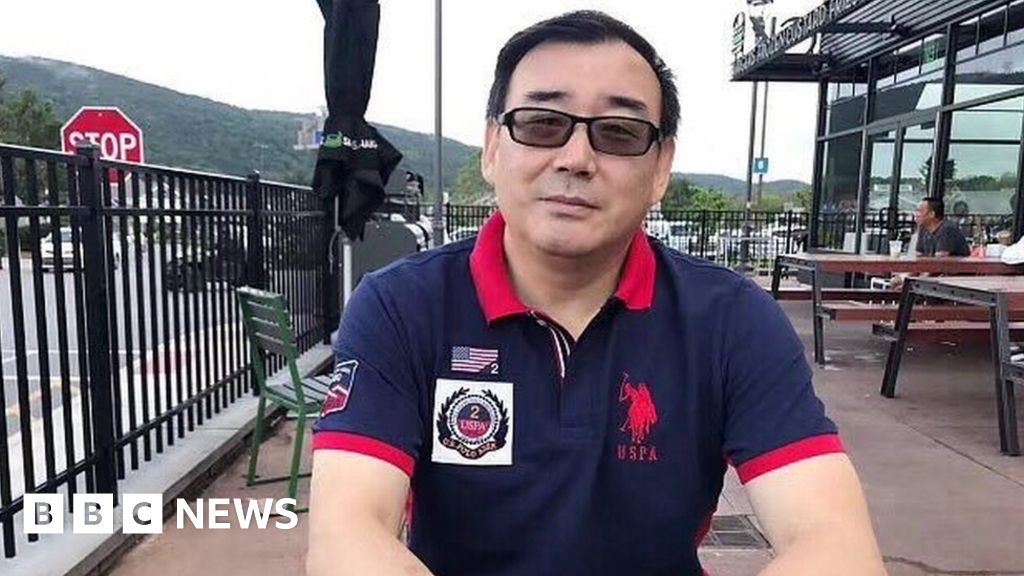
Australia says the treatment endured by one of its citizens in criminal detention in China is "unacceptable".

Chinese-Australian writer Dr Yang Hengjun has been held in Beijing since January. He has been accused of espionage - charges denied by him and the Australian government.

He now faces daily interrogations while being shackled, and has been increasingly isolated, Canberra said.

Australia has consistently lobbied Chinese authorities for his release.

But China's foreign ministry has told Australia to not interfere in the case, and to respect the nation's "judicial sovereignty".

On Monday, Foreign Minister Marise Payne said she was "very concerned" about his condition, which was reported in a recent consulate visit.

Mr Yang, a former Chinese diplomat, has been allowed one visit from Australian officials per month.

But he has been barred from contact with his lawyers and his family for close to 11 months and has not been given any of their letters.

Supporters say his health has deteriorated in recent months. China formally charged him in August.

Mr Yang, a scholar and novelist based in New York, was detained when he travelled to China in January with his wife Yuan Ruijuan and her child.

Prior to the arrest he had maintained an active presence on Chinese social media.

Nicknamed "the democracy peddler", he maintained a blog on the country's current affairs and international relations. However, he had not been directly critical of Chinese authorities in recent years.

Beijing has held him for alleged "involvement in criminal activities endangering China's national security". Australia has called for clarification of the charges.

Australia has also repeatedly requested that he receive "basic standards of justice, procedural fairness and humane treatment" during his detention.

His lawyers say his treatment has got worse as Chinese authorities attempt to extract a confession from him. His case must be brought before a court by March.

Canberra's rebuke comes as tensions remain heightened with Beijing.

Australia's political class was rocked last week by allegations of Chinese espionage and interference in domestic issues. China has strongly dismissed the claims as "imaginary fears".

Let's block ads! (Why?)


https://news.google.com/__i/rss/rd/articles/CBMiMWh0dHBzOi8vd3d3LmJiYy5jb20vbmV3cy93b3JsZC1hdXN0cmFsaWEtNTA2MjUyOTbSATVodHRwczovL3d3dy5iYmMuY29tL25ld3MvYW1wL3dvcmxkLWF1c3RyYWxpYS01MDYyNTI5Ng?oc=5

2019-12-02 09:03:23Z
52780453951928

Yang Hengjun: Australia criticises China for detainment of 'democracy peddler' - BBC News

Australia says the treatment endured by one of its citizens in criminal detention in China is "unacceptable".

Chinese-Australian writer Dr Yang Hengjun has been held in Beijing since January. He has been accused of espionage - charges denied by him and the Australian government.

He now faces daily interrogations while being shackled, and has been increasingly isolated, Canberra said.

Australia has consistently lobbied Chinese authorities for his release.

But China's foreign ministry has told Australia to not interfere in the case, and to respect the nation's "judicial sovereignty".

On Monday, Foreign Minister Marise Payne said she was "very concerned" about his condition, which was reported in a recent consulate visit.

Mr Yang, a former Chinese diplomat, has been allowed one visit from Australian officials per month.

But he has been barred from contact with his lawyers and his family for close to 11 months and has not been given any of their letters.

Supporters say his health has deteriorated in recent months. China formally charged him in August.

Mr Yang, a scholar and novelist based in New York, was detained when he travelled to China in January with his wife Yuan Ruijuan and her child.

Prior to the arrest he had maintained an active presence on Chinese social media.

Nicknamed "the democracy peddler", he maintained a blog on the country's current affairs and international relations. However, he had not been directly critical of Chinese authorities in recent years.

Beijing has held him for alleged "involvement in criminal activities endangering China's national security". Australia has called for clarification of the charges.

Australia has also repeatedly requested that he receive "basic standards of justice, procedural fairness and humane treatment" during his detention.

His lawyers say his treatment has got worse as Chinese authorities attempt to extract a confession from him. His case must be brought before a court by March.

Canberra's rebuke comes as tensions remain heightened with Beijing.

Australia's political class was rocked last week by allegations of Chinese espionage and interference in domestic issues. China has strongly dismissed the claims as "imaginary fears".

Let's block ads! (Why?)


https://news.google.com/__i/rss/rd/articles/CBMiMWh0dHBzOi8vd3d3LmJiYy5jb20vbmV3cy93b3JsZC1hdXN0cmFsaWEtNTA2MjUyOTbSATVodHRwczovL3d3dy5iYmMuY29tL25ld3MvYW1wL3dvcmxkLWF1c3RyYWxpYS01MDYyNTI5Ng?oc=5

2019-12-02 08:47:38Z
52780453951928

Minggu, 01 Desember 2019

'World first' cell phone detection cameras rolled out in Australia - CNN

Andrew Constance, New South Wales' Minister for Roads said the "world-first" technology would target illegal cell phone use through "fixed and mobile trailer-mounted cameras."
The cameras will use artificial intelligence to review images and detect illegal use of cell phones, according to Transport for NSW.
Images identified as being likely to contain a driver illegally using a call phone will then be verified by authorized personnel, authorities said, noting that images captured by the system would be "securely stored and managed."
India is trying to build the world's biggest facial recognition system
Over the next three years, 45 portable cameras will be set up across the state, in unknown locations, and without warning signs, CNN affiliate Sky News Australia reported.
For the first three months, drivers caught out by the technology will receive a warning letter, Transport for New South Wales said in a statement, after which offenders will face a fine of up to $344, or $457 in a school zone, and penalty points on their drivers license.
"The NSW Government is serious about reducing our state's road toll and rolling out mobile phone detection cameras is another way we will do this," Andrew Constance, Minister for Roads said in a statement.
Officials said that a trial of the technology earlier in the year had caught more than 100,000 drivers illegally using a phone at the wheel.
Would you trust an algorithm to diagnose an illness?
Some 329 people have died this year on New South Wales' roads, Reuters news agency reported, compared with 354 people for all of 2018, according to official statistics.
The state wants to cut the number of road fatalities by 30% by 2021, Reuters said.
Making and receiving phone calls while driving is legal in New South Wales, but using hands-free technology. Other functions, including using social media, video calling, photography, playing audio while driving are only legal if a driver has parked their vehicle outside of traffic.

Let's block ads! (Why?)


https://news.google.com/__i/rss/rd/articles/CBMiY2h0dHBzOi8vd3d3LmNubi5jb20vMjAxOS8xMi8wMS9hdXN0cmFsaWEvY2VsbC1waG9uZS1kZXRlY3Rpb24tY2FtZXJhLWF1c3RyYWxpYS1pbnRsLXNjbGkvaW5kZXguaHRtbNIBZ2h0dHBzOi8vYW1wLmNubi5jb20vY25uLzIwMTkvMTIvMDEvYXVzdHJhbGlhL2NlbGwtcGhvbmUtZGV0ZWN0aW9uLWNhbWVyYS1hdXN0cmFsaWEtaW50bC1zY2xpL2luZGV4Lmh0bWw?oc=5

2019-12-01 12:28:00Z
CBMiY2h0dHBzOi8vd3d3LmNubi5jb20vMjAxOS8xMi8wMS9hdXN0cmFsaWEvY2VsbC1waG9uZS1kZXRlY3Rpb24tY2FtZXJhLWF1c3RyYWxpYS1pbnRsLXNjbGkvaW5kZXguaHRtbNIBZ2h0dHBzOi8vYW1wLmNubi5jb20vY25uLzIwMTkvMTIvMDEvYXVzdHJhbGlhL2NlbGwtcGhvbmUtZGV0ZWN0aW9uLWNhbWVyYS1hdXN0cmFsaWEtaW50bC1zY2xpL2luZGV4Lmh0bWw

Australia's Weeks says hope helped him survive Taliban captivity - Reuters

MELBOURNE (Reuters) - Timothy Weeks, the Australian academic released by the Taliban in November after being kept hostage for more than three years, said on Sunday that hope helped him survive the ordeal.

FILE PHOTO: Timothy Weeks speaks to the camera while kept hostage by Taliban insurgents in an unknown location, said to be Afghanistan, in this still image taken from social media video said to be shot January 1, 2017 and shared by pro-Taliban cahnnels. Social media via REUTERS

Weeks and U.S. citizen Kevin King were freed by the Taliban in return for the release of three Taliban commanders. The two were kidnapped in August 2016 outside Kabul’s American University of Afghanistan where they worked.

Speaking publicly for the first time since his release a visibly emotional Weeks said that the “long and tortuous ordeal” had a profound effect on him.

“At times, I felt as if my death was imminent and that I would never return to see those that I loved again,” Weeks said in Sydney in remarks televised by the Australian Broadcasting Corp. “But, by the will of God, I am here. I am alive and I am safe. And I am free. There is nothing else in the world that I need.”

He said that he had never given up hope, although his freedom took longer than he expected.

“If you give up hope, there is very little left for you,” he added.

Kidnapping has been a major problem in Afghanistan for many years. Most victims are Afghans and many kidnappers are criminal gangs seeking ransoms but foreigners have also been abducted for political ends.

The 50-year old teacher from Wagga Wagga in New South Wales, who returned to Australia on Thursday, also said that he believed that there were six attempts made to free him and King, including U.S. Navy SEAL forces in at least one instance.

“We were woken in the morning at around 2 a.m. and we were taken down into the tunnels. We were told by our guards that it was Daesh, and I’ve since learnt that I believe now that it was the Navy SEALs coming in to get us,” he said.

He said that although both were treated “as well as could be expected”, they were moved around various locations and sometimes kept in dark cells.

Weeks said he does not hate the guards who were watching him.

“A lot of people don’t admit this, but for me, they were soldiers. And soldiers obey the commands of their commanders. Then don’t get a choice,” Weeks said.

“Some of them were so compassionate and such lovely, lovely people. And it really led me to think about... You know, how did they end up like this?”

Reporting by Lidia Kelly; Editing by Christian Schmollinger

Let's block ads! (Why?)


https://news.google.com/__i/rss/rd/articles/CBMijgFodHRwczovL3d3dy5yZXV0ZXJzLmNvbS9hcnRpY2xlL3VzLWFmZ2hhbmlzdGFuLXRhbGliYW4tYXVzdHJhbGlhL2F1c3RyYWxpYXMtd2Vla3Mtc2F5cy1ob3BlLWhlbHBlZC1oaW0tc3Vydml2ZS10YWxpYmFuLWNhcHRpdml0eS1pZFVTS0JOMVk1MFI10gE0aHR0cHM6Ly9tb2JpbGUucmV1dGVycy5jb20vYXJ0aWNsZS9hbXAvaWRVU0tCTjFZNTBSNQ?oc=5

2019-12-01 02:55:00Z
CAIiEGjpkPq07Tsa9R1RdQT9TEwqFggEKg0IACoGCAowt6AMMLAmMLT5lwM